Showing posts with label books. Show all posts

Tuesday, February 25, 2014

Composites


"Shorter sentences and simple words!" was the battle cry of all my English teachers. Their comments and corrections of our English-language essays and homework assignments were very predictable. Apparently, they had all sworn allegiance to the same secret Fraternal Order of Syntax Police. I am sure that students of the English language all over the world have heard similar advice from their teachers, but English teachers at German schools excel in their diligent use of linguistic guillotines to chop up sentences and words. The problem is that they have to teach English to students who think, write and breathe in German, the lego of languages.


Lego blocks invite the observer to grab them and build marvelously creative and complex structures. The German language similarly invites its users to construct composite words and composite sentences. A virtually unlimited number of composite nouns can be created in German, begetting new words which consist of two, three or more components with meanings that extend far beyond the sum of their parts. The famous composite German word "Schadenfreude" is now used worldwide to describe the shameful emotion of joy when observing harm befall others. It combines "Schaden" (harm or damage) and "Freude" (joy), and its allure lies in the honest labeling of a guilty pleasure and the inherent tension of combining two seemingly discordant words.

The lego-like qualities of German can also be easily applied to how sentences are structured. Commas are a German writer's best friends. A German sentence can contain numerous clauses and sub-clauses, weaving a quilt of truths, tangents and tangential truths, all combined into the serpentine splendor of a single sentence. Readers may not enjoy navigating their way through such verschachtelt sentences, but writers take great pleasure in envisioning a reader who unwraps a sentence as if opening a matryoshka doll only to find that the last word of a mammoth sentence negates its fore-shadowed meaning.


Even though our teachers indulged such playfulness when we wrote in German, they were all the more harsh when it came to our English assignments. They knew that we had a hankering for creating long sentences, so they returned them to us covered in red ink markings, indicative of their syntactic fervor. This obsession with short sentences and words took the joy out of writing in English. German was the language of beauty and poetry, whereas English became the language best suited for efficient communication. By the time I reached my teenage years, I began to lose interest in writing anything in English beyond our mandatory school assignments. I still enjoyed reading books in English, such as the books of Enid Blyton, but I could not fathom how a language of simple sentences and simple words could be used to create works of literary beauty. This false notion fell apart when I first read "Things Fall Apart" by Chinua Achebe.


The decision to read "Things Fall Apart" was not completely arbitrary. My earliest memories of this world are those of the years I spent as a child in Igboland. My family moved from Pakistan to Germany when I was one year old, but we soon moved on to Nigeria. Germany was financing the rehabilitation of the electrical power grid that had been destroyed during the Biafra War. My father was one of the electrical engineers sent from Germany to help with the restoration and expansion of the electrical power supply in the South-Eastern part of Nigeria – the region which was home to the Igbo people and which had attempted and failed to secede as the Republic of Biafra.

We first stayed in Enugu, the former capital of the transient Republic of Biafra and then lived in the city of Aba. My memories of the time in Igboland are just sequences of images and scenes, and it is difficult to make sense of all of them: Kind and friendly people, palm trees and mysterious forests, riding a tricycle in elliptical loops, visits to electrical sub-stations. We returned to Germany when I was four years old. I would never live in the Igboland again, but recalling the fragmented memories of those early childhood years has always evoked a sense of comfort and joy in me. When I came across "Things Fall Apart" as a fourteen-year old and learned that it took place in an Igbo village, I knew that I simply had to read it.


I was not prepared for the impact the book would have on me. Great books shake us up, change us in a profound and unpredictable manner, leaving footprints that are etched into the rinds of our soul. "Things Fall Apart" was the first great English language book that I read. I was mesmerized by its language. This book was living proof that one could write a profound and beautiful book in English, using short, simple sentences.
 As the Ibo say: "When the moon is shining the cripple becomes hungry for a walk."
And so Okonkwo was ruled by one passion— to hate everything that his father Unoka had loved. One of those things was gentleness and another was idleness.
 Living fire begets cold, impotent ash.
A child cannot pay for its mother's milk.
It wasn't just the beautiful language, aphorisms, Igbo proverbs and haunting images that made this book so unique. "Things Fall Apart" contained no heroes. The books that I had read before "Things Fall Apart" usually made it obvious who the hero was. But "Things Fall Apart" was different. Okonkwo was no hero, not even a tragic hero. But he also was no villain. As with so many of the characters in the book, I could see myself in them and yet I was also disgusted by some of the abhorrent acts they committed. I wanted to like Okonkwo, but I could not like a man who participated in the killing of his adopted son or nearly killed his wife in a fit of anger.
Guns fired the last salute and the cannon rent the sky. And then from the center of the delirious fury came a cry of agony and shouts of horror. It was as if a spell had been cast. All was silent. In the center of the crowd a boy lay in a pool of blood. It was the dead man's sixteen-year-old son, who with his brothers and half-brothers had been dancing the traditional farewell to their father. Okonkwo's gun had exploded and a piece of iron had pierced the boy's heart.
Achebe was not judging or mocking his characters, but sharing them with us. He was telling us about how real humans think and behave. As I read the book, I felt that I was being initiated into life. Life would be messy. Most of us would end up being neither true heroes nor true villains but composites of heroism and villainy.  If I did not want end up like Okwonkwo, the ultimate non-negotiator, I needed to accept the fact that my life would be a series of negotiations: negotiations between individuals, negotiations between conflicting identities and negotiations between values and cultures. The book described a specific clash of cultures in colonial Africa, but it was easy to apply the same clash to so many other cultures. I tried to envision Okwonkwo as an Indian farmer whose world began to fall apart when Arab armies invaded the Sindh. I imagined Okwonkwo as a Native American, a Roman or a Japanese warrior, each negotiating his way through cultural upheavals. The history of humankind is always that of things falling apart and, importantly, that of rebuilding after the falling apart.    
As soon as the day broke, a large crowd of men from Ezeudu's quarter stormed Okonkwo's compound, dressed in garbs of war. They set fire to his houses, demolished his red walls, killed his animals and destroyed his barn. It was the justice of the earth goddess, and they were merely her messengers. They had no hatred in their hearts against Okonkwo. His greatest friend, Obierika, was among them. They were merely cleansing the land which Okonkwo had polluted with the blood of a clansman.
I read "Things Fall Apart" to find my past, but it defined my future. It helped me recognize the beauty of the English language and prepared me for life in a way that no book had ever done before.

Notes: All quotes are from "Things Fall Apart" by Chinua Achebe

Image Credits: Stack of "Things Fall Apart" (by Scartol via Wikimedia Commons), Photo of a porcelain insulator with a bullet hole probably from the Biafra war, Photo taken from the Presidential Hotel in Enugu 1973. 

Thursday, October 4, 2012

Things Left Unsaid

Igbo garment (Nigeria 1950-1970)
via Ellen in Michigan - Wikimedia

Chimamanda Adichie reviews There Was a Country: A Personal History of Biafra by Chinua Achebe in the London Review of Books:

Nigeria, at independence from British rule in 1960, was called the Giant of Africa. With a large population, an educated elite and many natural resources, especially oil, Nigeria was supposed to fly the flag of democratic success. It did not, and it is clear now, in retrospect, that it could not possibly have done so. Colonial rule, as a government model, was closer to a dictatorship than a democracy. Nigeria was a young nation, created in 1914, as Nigerian children would learn in history class in the endlessly repeated sentence: ‘Lord Frederick Lugard amalgamated the northern and southern protectorates to form one country and his wife gave it the name nigeria.’

It is debatable whether, at independence, Nigeria was a nation at all. The amalgamation was an economic policy; the British colonial government needed to subsidise the poorer North with income from the resource-rich South. With its feudal system of emirs, beautiful walled cities, and centralised power systems, the North was familiar to Lord Lugard – not unlike the Sudan, where he had previously worked. In the South, the religions were more diverse, the power systems more diffuse. Lugard, a theorist of imperial rule, believed in the preservation of native cultures as long as they fitted his theories of what native cultures should be. In the North, the missionaries and their Western education were discouraged, to prevent what Lugard called their ‘corrupting influence’ on Islamic schools. Western education thrived in the South. The regions had different interests, saw each other as competitors, and became autonomous at different times; there was no common centre. A nation is, after all, merely an idea. Colonial policy did not succeed in propagating the idea of a nation: indeed, colonial policy did not try to. In the North colonialism entrenched the old elite; in the South it created a new elite, the Western-educated. This small group would form the core of the nationalist movement in the 1950s, agitating for independence. They tried to establish the idea of ‘nation’ and ‘tribe’ as binary, in opposition to each other, a strategy they believed was important for the exercise of nation-building. But the politicisation of ethnicity had already gone too far.


Wednesday, October 3, 2012

God wielded the buzzer

Christian Lorentzen writes in the London Review of Books:


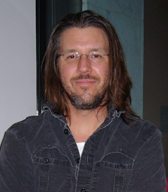
David Foster Wallace
Wikimedia Pabouk
David Foster Wallace’s parents, Sally and Jim, were the sort of couple who read each other Ulysses in bed while holding hands. Jim read David and his younger sister AmyMoby-Dick as a bedtime story. It wasn’t inevitable that the boy would grow up to write an epic novel, but it wasn’t accidental. Jim was a philosophy professor at the University of Illinois; Sally taught English at a community college, and at home with her children was what her son in his fiction would term a ‘militant grammarian’, constantly monitoring their usage and syntax, turning it into a game. David was a creature of university campuses: Champaign-Urbana as a child; Amherst for college; Tucson for his MFA at the University of Arizona; back to Amherst to teach fiction writing; Cambridge, Massachusetts, for a stint as a graduate student in philosophy at Harvard, then teaching fiction at Emerson College in Boston; Syracuse, where he went to be close to the poet Mary Karr; Bloomington-Normal for his first secure position at Illinois State; and finally Pomona College, in Claremont, California, where he killed himself in 2008 at the age of 46. He emerged as a writer from a university-based avant-garde tradition, but was adopted at an early stage by the New York mainstream; he was sought after by editors of glossy magazines and touted in the media as a ‘voice of his generation’ from his early thirties onwards, photographed with his long hair and bandana and two big dogs. This combination of academic prestige and big city popularity is fairly rare, and it’s one reason Wallace’s canonisation in the US has proceeded so rapidly. Every Love Story Is a Ghost Story (the line is Christina Stead’s but Wallace used it twice in his fiction and once in an essay, in reverse; Stead seems to have been misremembering or paraphrasing a line of Virginia Woolf’s about Henry James) grew out of D.T. Max’s post-mortem profile of Wallace for the New Yorker, and is very much the version of his life as seen from Times Square.


Read more here..... 

Thursday, September 27, 2012

Libricide in the Digital Age

Plaque in Frankfurt, reminding us of the Nazi book-burning
Via Wikimedia - ArcCan 
My bookshelves are bulging and I am just running out of space for books. I enjoy buying books, but I have a very hard time when it comes to getting rid of them. After I have finished reading a good book, I become attached not just to the physical book, but also to the ideas and memories associated with that book. When I look at the book, I remember the fun I had reading it and I also think about how it made me feel and how it inspired me to think or write.

As an old-fashioned and traditional bookophile, I was a bit reticent when it came to trying it out E-books. I was worried that I would miss the tactile pleasure of thumbing through the physical pages. I was concerned that the digital highlighting on a Kindle reader would be no match for the visual pleasure elicited by the fluorescent glow of my German Stabilo highlighters. I also did not like the fact that I would have to pay the full price for every E-book, because one could not walk into a used ebook store and get bargain books for a few cents.

Nevertheless, I gave it a try. Once I started using the Kindle App on the iPad, I realized that the ability to carry thousands of books around with me, gave me a completely new kind of bookophile pleasure. I missed my Stabilo highlighter and the ability to physically grasp books, but the fact that Rilke, Orwell and Zadie Smith were all tucked away in my backpack, gave me a completely new kind of bookophile pleasure. I was about to extol the pleasures of ebooks to everyone and was thinking about gradually becoming an ebook-only kind of person.

Then I read two articles. The first one was "Will Your Children Inherit Your E-Books?" by Amanda Katz and asked the simple question of how does one inherit E-books?


In the age of the e-book, the paper book faces two possible and antithetical fates. It may become something to be discarded, as with the books that libraries scan and cannibalize. (In the introduction to another book, Unpacking My Library: Writers and Their Books, Price mentions the severed book spines that hang on the wall at Google, "like taxidermists' trophies.") Alternatively, it may become a special object to be preserved and traded. My grandfather's copy of War of the Worlds obviously falls into the second category — but very few of the millions of books published since the mid-19th century are ones you'd want to own. If Amazon has a "long tail" of obscure but occasionally purchased titles, the tail that goes back 150 years is near endless and thin as thread.
 Meanwhile, the kind of "serial" book sharing (as Price describes it) that occurs over time is giving way to simultaneous, "synchronous" sharing. With the Kindle, you can see what thousands of other Kindle readers are highlighting in the book you're reading — a fairly astonishing innovation. But the passage of books from hand to hand, gathering inscriptions along the way, is not part of the e-book economy. Will your grandchild inherit your Kindle books? No one knows, but given password protection and the speed at which data becomes obsolete, that seems highly unlikely.
Read more here...

I was stumped by this article. Of course I want my children and grandchildren to inherit my books. I still treasure a small century-old dictionary that my grandfather gave me, and I hope that my grandchildren will also enjoy thumbing through my old books. But how will they do this, if all I leave them are a bunch of files, many which may or may not be password-protected. Will I remember to tell them my Kindle password before I die? Does a dying bookophile gather around their family and tell them "My Kindle password is Lolita underscore Camus" before he passes on? Or will my E-books die with me?

The second article "How to Make a Book Disappear" was written by Maria Konnikova and discussed the ironic disappearance of George Orwell's 1984 from some Kindle devices because the retailer Amazon had detected that certain versions of these E-books were violating the copyright. Konnikova also brought up the excellent point that making digital books vanish could be the future version of book-burning:
An e-book is not a physical book. That point might seem trite until you stop for a moment to think how much simpler it is, in a certain sense, to destroy electronic than physical traces. There's no need of inciting mass cooperation in book-burning enterprises. No need for secret police or raids or extensive surveillance. The power to remove a book from a device, to remove all traces of it from retailers' websites, to expunge it from a publisher's online record: It would simplify the work of a would-be Soviet Union or Oceania multifold, would it not? It's ugly. For all kinds of reasons.     
Read more here...

After reading these articles, I am now rethinking my conversion-in-progress towards ebookophilia. I still like the physical feel of books and do not like the idea of my books dying or disappearing. I cannot afford to buy both, the hardcopy and E-book version of each book, so I am probably going to stick to buying old-fashioned books for now.

Monday, August 13, 2012

The Desire to Regulate Desires

From Wikimedia Commons 


The lawyer and journalist Eric Berkowitz has written an excellent book entitled "Sex and Punishment: Four Thousand Years of Judging Desire" on how humanity devotes an extraordinary amount of time and effort to regulate human sexuality. 

Sara Wheeler has reviewed the book for the "Literary Review" and she points out:

What all this amounts to, in most of the human cultures that have ever existed, is the male fear of and wish to subjugate women.  
  
Continue reading Sara Wheeler's review here.

An excerpt of Berkowitz' book can be found on the Boing Boing website.


Sunday, August 12, 2012

Eric Kandel on the Intersection Between Neuroscience, Psychoanalysis and Art

Freud ca. 1900, from Wikimedia commons


The famous neuroscientist and Nobel Prize laureate Eric Kandel has written a new book on how science, psychoanalysis and art converged in Vienna around the 1900s and set in motion an exciting new integrative approach to understanding  the human mind and soul. The book is entitled "The Age of Insight: The Quest to Understand the Unconscious inArt, Mind, and Brain, from Vienna 1900 to the Present" and an excerpt of the book has been released:

Beauty does not occupy a different area of the brain than ugliness. Both are part of a continuum representing the values the brain attributes to them, and both are encoded by relative changes in activity in the same areas of the brain. This is consistent with the idea that positive and negative emotions lie on a continuum and call on the same neural circuitry. Thus, the amygdala, commonly associated with fear, is also a regulator of happiness.
For every evaluation of emotion, from happiness to misery, we use the same fundamental neural circuitry. In the case of art, we evaluate a portrait’s potential for providing new insights into another person’s psychological state. This discovery, by Ray Dolan and his colleagues at University College London, was based on a set of studies in which volunteers viewed faces whose expression of sadness, fear, disgust, or happiness was gradually changed from low to high intensity.

Continue reading the excerpt from the book here here....